INTERVIEW:

ULRIKA SPACEK  /  EXPO

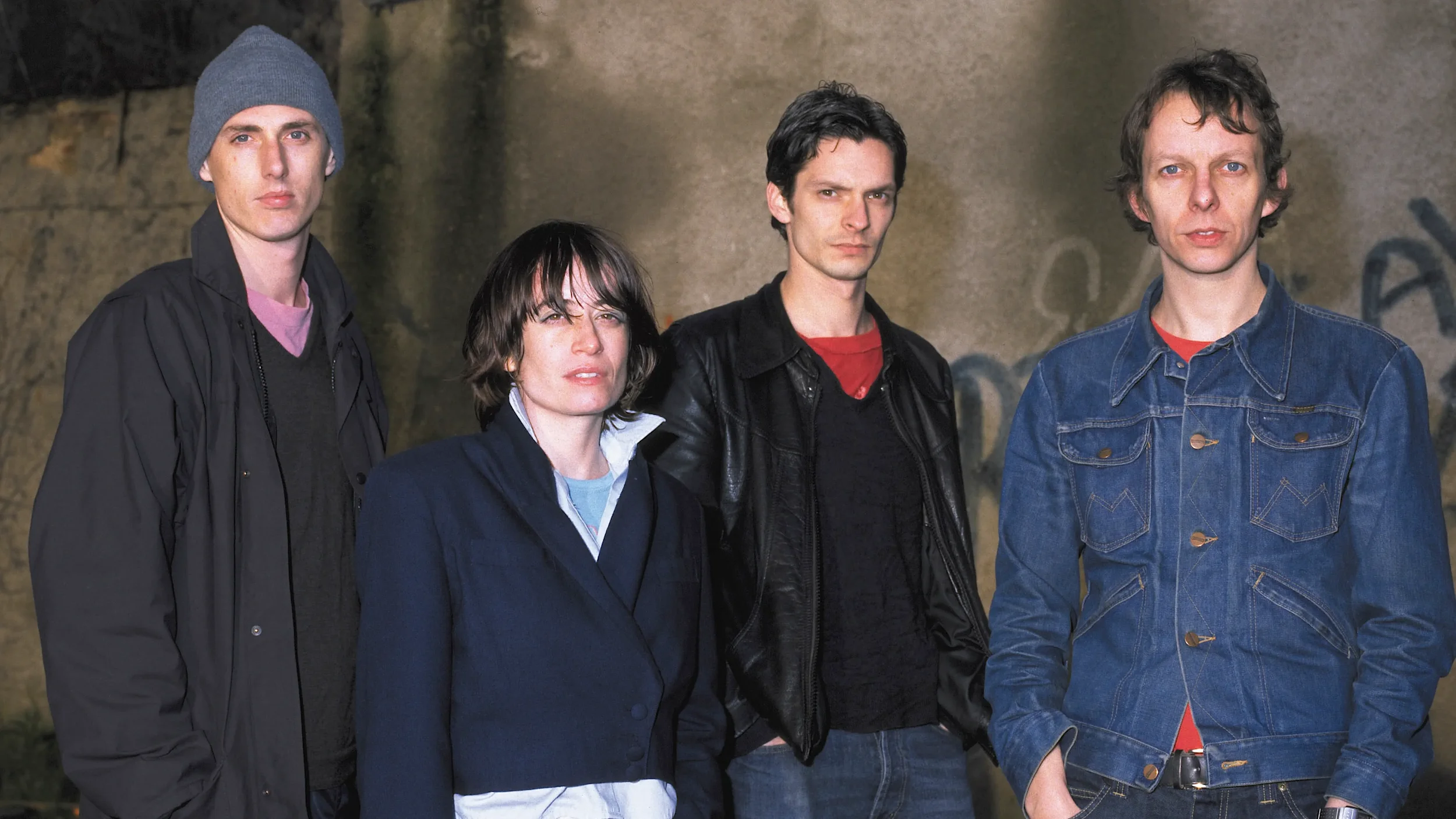
For the past decade, Ulrika Spacek have carefully crafted a world entirely of their own. Carving out a space within chaos, their blend of warped electronics, fractured melodies and unquiet experimentation has seen their soundscape develop into something deliberately disorientating. Time has not dulled this instinct; it has further refined it. Though the core of their sound remains intact, each new project has pushed the boundaries further, testing the very limits of their musical identity.

Their fourth offering, EXPO, is the starkest articulation of their evolution yet. Piecing together fragments shaped in isolation, it transforms the band’s distance into a picture of unity. In this fusion of frenetic, disjointed realities, they have created something collective and resolute in its intentions. Rather than retreating in on themselves, the band consciously broadened their gaze by exploring the increasingly devolving world around them. In facing their inner conflicts head-on, something fractured and frustrated became not a force to consume them, but a source of momentum to push against instability.

Expanding an already broad sonic palette with glimmering textures, saturated rhythms and moments of deliberate emotional introspection, Ulrika Spacek take control of the change that attempts to dictate them. Their past foundations remain the same, but what grows from beneath feels newly defined and unwavering in its confidence. Less searching has led to self-assurance. Throughout their latest project, a quiet conviction takes hold, drawing together all of their best elements into something unmistakably their own.

Words: Alice Beard
@alicebeard03


You’ve described the creative process for this record as being like a “jigsaw” or a “scrapbook”. What does that look like in practical terms when you’re writing and assembling songs, and how much of the record was shaped by accident or misalignment?

Rhys:
Well it is in fact very hard to sit down with an instrument and just write a song. When you have multiple albums out in the world it becomes harder because the thought of sitting down and writing something uninspired becomes more and more terrifying. The purest ideas come from an almost childlike state of play, so we just made sure to record any little fragments when messing around. That could range from trying out a new drum machine for the first time when you don't know what you are doing, or even testing the mic placement on a piano before an artist comes in the studio to record. It was about capturing little moments or ideas then putting them in a big Dropbox folder, which we used as a sample bank. The thrill of bending and warping ideas together from separate, distinct places was fun and inspiring and it always leads to more interesting music than sitting down at an instrument and hoping a genius piece of songwriting comes. We have always written in a patchwork type way in terms of ideas, but this time we leaned into more and went one step further.

On this album, did texture or sound design ever replace traditional songwriting, moments where sound itself was doing the emotional or narrative work rather than melody or lyric?

Rhys:
It's very seldom that one of our songs starts with the songwriting, the song kind of reveals itself further down the line. We kind of start with the sound design, this record was very much built from the drums up, we put so much saturation on drums that sometimes melodies would come out of it, but I am proud to say that we are a fairly experimental group that does write 'songs'. It's always a fun challenge to find the song in the sonics and I think it's quite a signature thing for us. On this record we did try to leave more passages without vocals though, in that way it was a bit more like our first album where we had hypnotic sections, and in answer to your question we did leave more space for the music to deliver the emotional narrative.

“We have increasingly worked in solitude, putting the pieces together to make something truly collective.”

— rhys edwards

Working this way, did it change anything practical in the room?

Rhys:
Well it certainly meant that we could work together and separately without actually being in the room. I think a big part of being in the 'room' is trying to bring each other together. That can be a great thing emotionally, but can also narrow the playing field when working on music. Having separate fragments meant that ideas were pulling away from each other, and that can be musically interesting. It essentially means you are blending foreign ideas, and if you can make it work, which is part of the challenge, it can really lead to magic. But we tried to make the record ebb and flow a bit, that's mainly why we ended both sides of the vinyl with tracks that were very much written and recorded whilst being in the same room. Across an album, we have always loved contrast, tension and release, and working more remotely and in isolation as well as together in a room allowed us to push these contrasts further.

You’ve spoken about using techniques such as sampling and pitch-shifting on this record, including Rhys’ AI-assisted ‘female’ vocals. Did it feel like a natural extension of your existing approach, or did it open up new emotional or creative possibilities within the band?

Rhys:
We've just got better at production, since the band's formation we have recorded ourselves and we've just got more capable and using the computer or pedals or synths to process sound the way we want it to sound. It's one of the reasons why we keep going, it's fun to learn and to broaden the possibilities of what you can say, sonically.

There’s a tension running through parts of EXPO that feels very of this moment. Over the last decade, what outside pressures, political, economic or cultural, have actually forced changes in how you write rather than just colouring the lyrics?

Rhys:
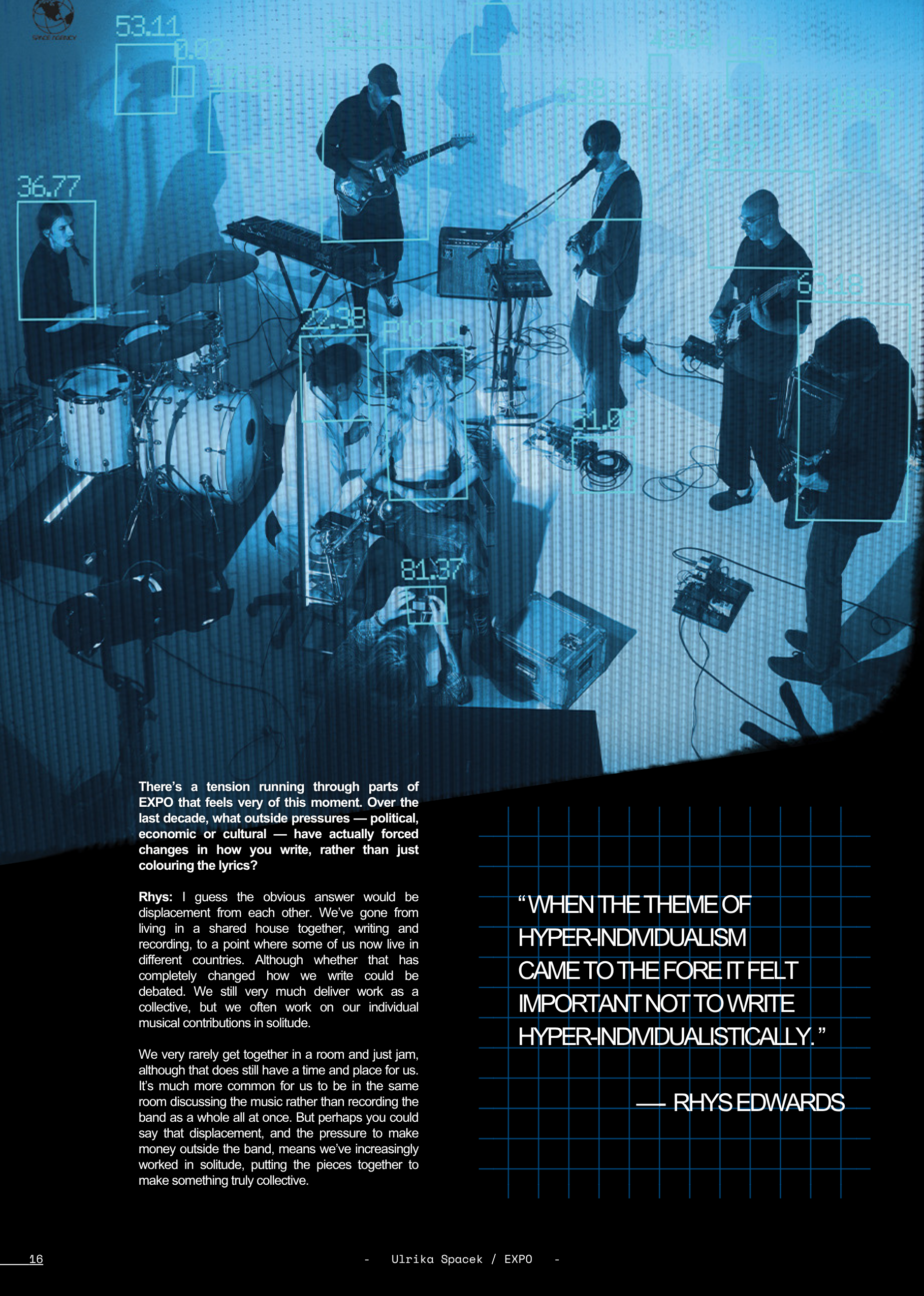
I guess the obvious answer would be displacement from each other. From living in a shared house together writing and recording to nowadays where some of us live in different countries. Although whether that has completely changed how we write could be debated. We very much deliver work as a collective but we often work on our individual musical contributions in solitude. We very rarely collect in a room and just jam - although that does have a time and place for us, it's much more common for us to be in the same room discussing the music rather than recording the band as a whole at once, but perhaps you could say that displacement and pressures to make money outside of the band means we have increasingly worked more in solitude, putting the pieces together to make something truly collective.

Was there anything you deliberately avoided writing about on EXPO, subjects that felt too obvious, too neat or too easy to resolve?

Rhys:
No, I don't think thematically anything was off the table. There was perhaps a focus as a lyric writer to look outwards a bit more. Not in a preachy way, I always write in a way that's a bit of a neurotic discussion with myself, but when the theme of hyper-individualism came to the fore it felt important to not write hyper-individualistically, less 'woe is me' but rather reflections of myself in this confusing alienating world around us.


“The purest ideas come from an almost childlike state of play.”

— Rhys edwards

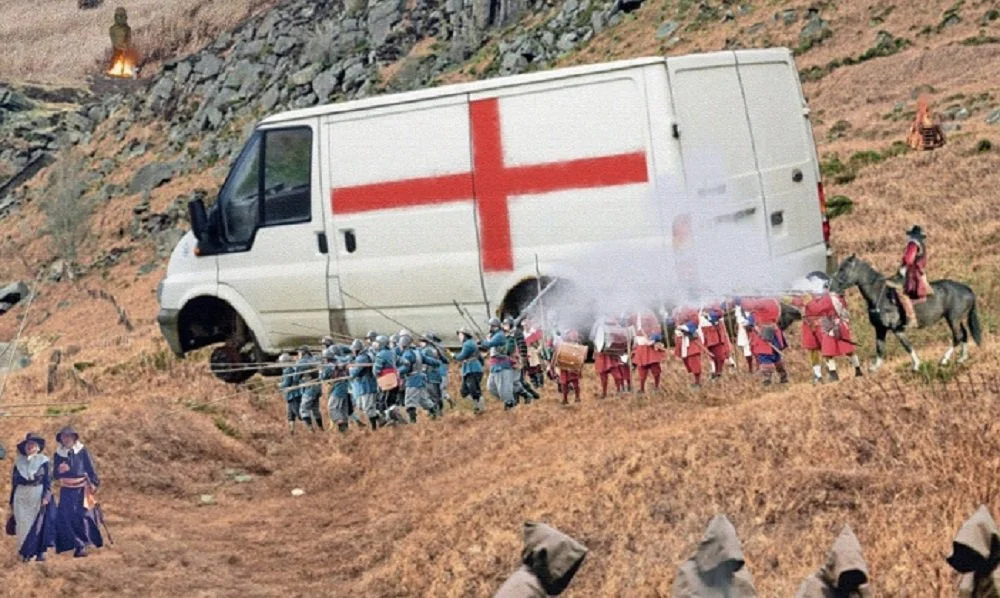
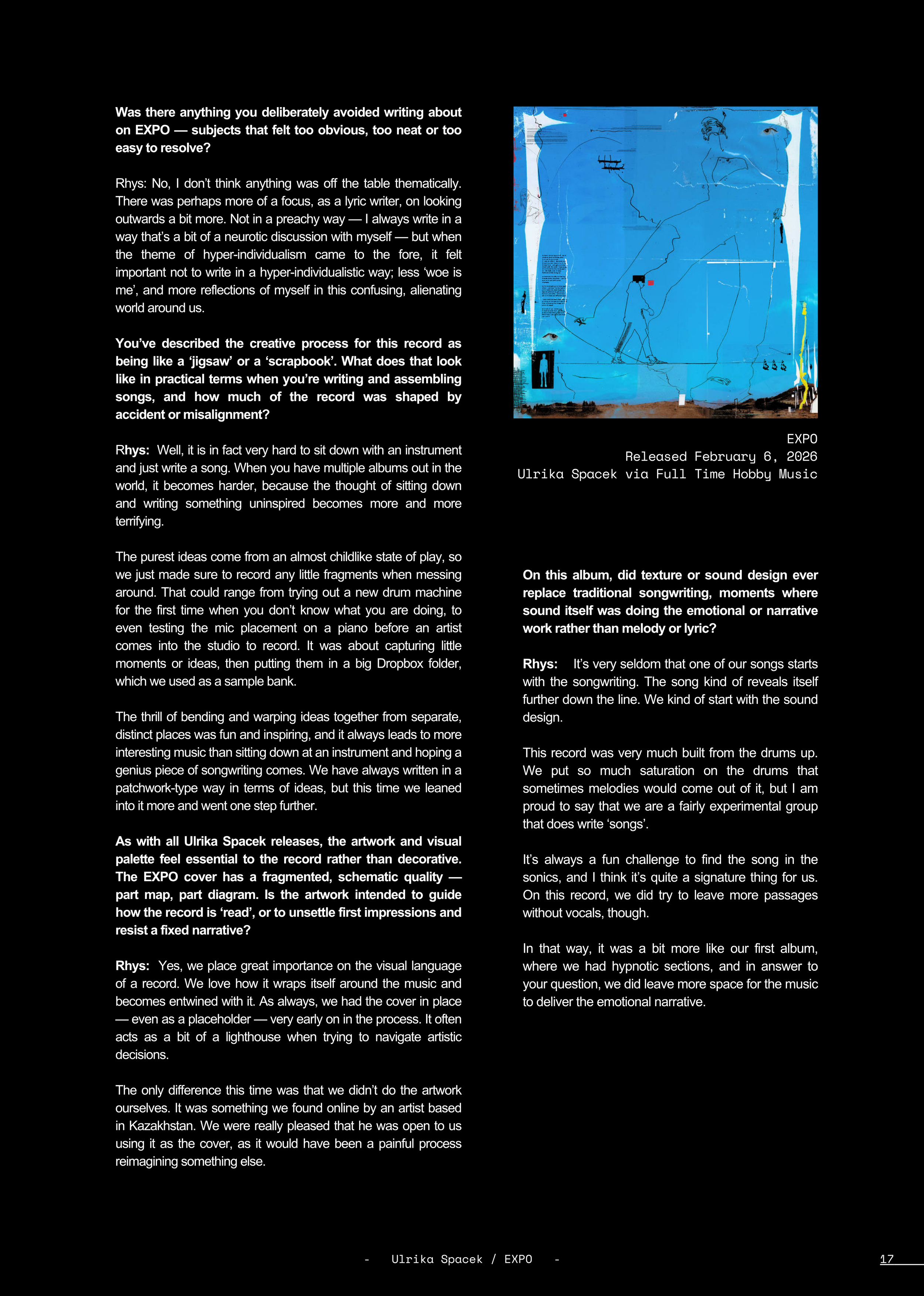
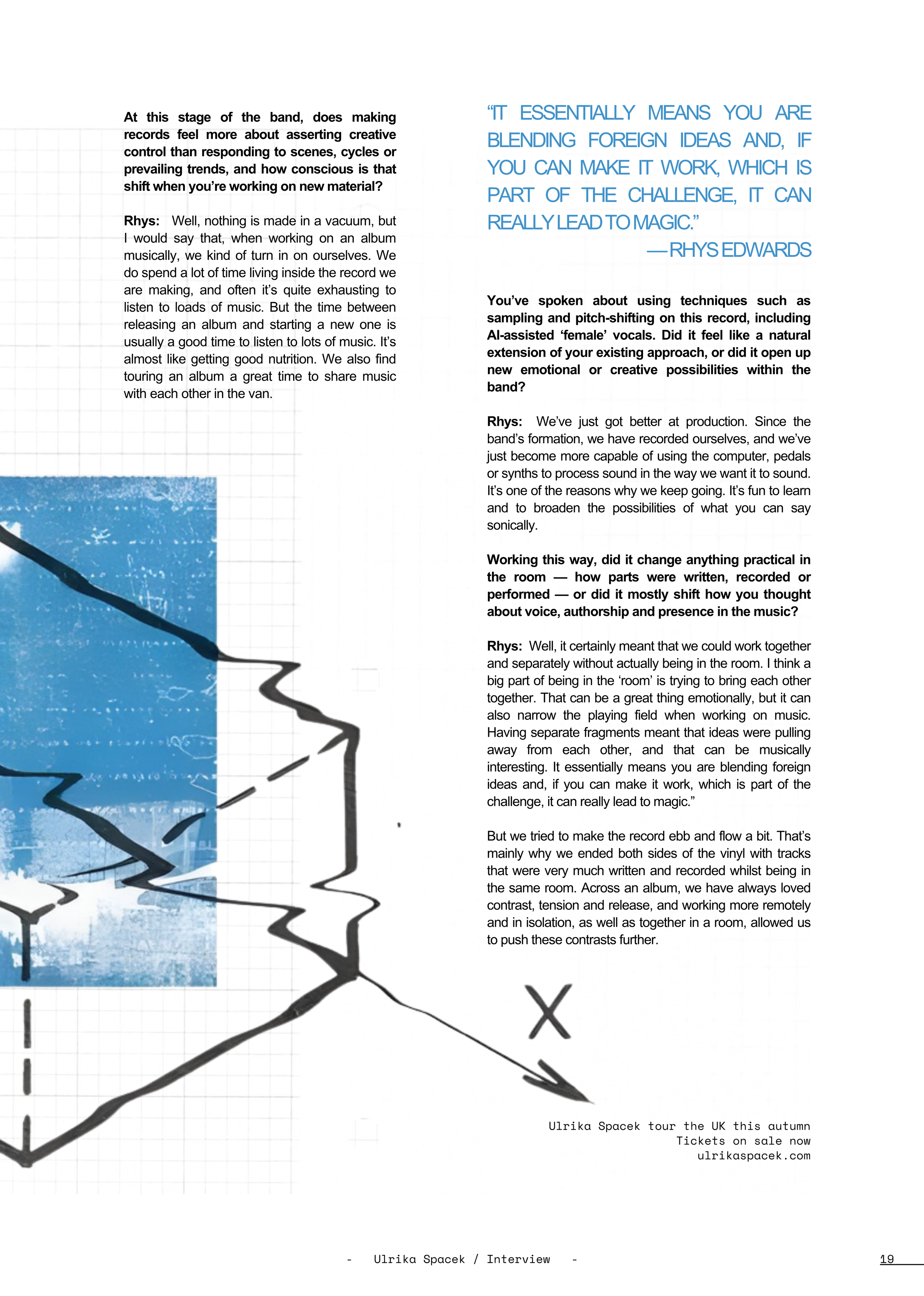
As with all Ulrika Spacek releases, the artwork and visual palette feel essential to the record rather than decorative. The EXPO cover has a fragmented, schematic quality, part map, part diagram, part erasure. Is the artwork intended to guide how the record is read, or to unsettle first impressions and resist a fixed narrative?

Rhys:
Yes, we place the visual language of a record as very important. We love how it wraps itself around the music and becomes entwined. As always we had the cover in place, even as a placeholder very early on in the process, it often can act as a bit of a lighthouse when trying to navigate artistic decisions. The only difference this time was that we didn't do the artwork ourselves, it was something we found online, from an artist based in Kazakhstan. We were really pleased that he was up for us using it as the cover, as it would have been a painful process reimagining something else.

Compared to earlier records, did EXPO feel like a rupture or a refinement, and was that shift intentional or only obvious in hindsight?

Rhys:
It felt like a new chapter, we hit the ground running really and felt like we had all gone up a level in our abilities to get across what we wanted. There was definitely a will to challenge new ground but there was also a kind of quiet confidence and comfort in that we felt we knew who we were as a band. One of the nice things of having multiple past albums is that we have left many seeds in past records, so you can almost use yourself as a reference. Even though people often refer to us as a 'psych' band, we actually feel that we have made quite a big sonic palette in our discography to play with and feel there's quite a few off-shoots that we can pursue if we want to.

It’s been a decade since the album Paranoia. Looking back over that ten-year span, how do you feel the band’s perspective and priorities have shifted?

Rhys:
Wow yes a decade, that is crazy. Well I think we are still similar people with a similar outlook to music with a fascination of world building. Making and playing music was perhaps a bit more entwined with hedonism back then, but ultimately I’d like to think we are in place that we would have wanted to be. Of course, you would always like to have a bigger audience as you want your music to connect with many people, but I think our younger selves would be happy with being able to tour America and Europe. Back then we would have probably wished to be doing that every day in a year, now we have to make sure touring is balanced with holding down separate incomes and tending to our families.

At this stage of the band, does making records feel more about asserting creative control than responding to scenes, cycles or prevailing trends?

Rhys:
Well nothing is made in a vacuum, but I would say when working on an album musically we kind of turn in on ourselves. We do spend a lot of time living in the record we are making and often it's quite exhausting to listen to loads of music. But the time in between releasing an album and starting a new one is usually a good time to listen to lots of music, it's almost like getting good nutrition. We also find the touring of an album a great time to share music between the band in the van.


More Features & Interviews